

Introduction
In this project by using engineering and modern technology, we are trying to build a hearing system for deaf and semi deaf people. This system is useful to teach a deaf student by providing recorded audio classes. Video classes can be enjoyed also. It is really a hundred percent practical entertainment system for enjoying music by teeth. For this our primary requirement will be a low power audio signal amplifier system. By taking the help of physics, understanding biological facts behind the hearing process and using electronics knowledge let’s make the project successful. The components used here are easily available and cheap.
Block diagram

Components required
Capacitor 10 µF, 220 µF, 0.22µF
LM386
Resistors 470 Ω, 1.2 kΩ, 50 Ω
DC Motor used as a vibrator
Variable resistor 10 kΩ
LED
Switch
Loud speaker 4 Ω, 2.5 inch
Audio pin (stereo)
3.7 volt Li-ion battery charger.
Li-ion battery
Components Description
LM 386

The op-amp used here is LM386 which is a general purpose op-amp and easily available in market. It is manufactured by Texas Instruments. It is a low voltage audio power amplifier. It can operate with a supply voltage from 5V to 18 V. The gain is internally set to 20 to keep external part count low, but the addition of an external resistor and capacitor between pins 1 and 8 will increase the gain to any value from 20 to 200. It is generally used in AM-FM radio amplifiers.
Resistor

A resistor restricts the flow of current. The resistors used here are carbon film and quarter watt type.
Variable resistor

The resistance value can be adjusted by rotating the knob. It is used here as a volume control.
LED (Light Emitting Diode)

It is a transducer which converts electrical energy into light energy.
Capacitor
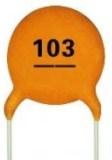
A capacitor stores electric charge. Capacitors 10 µF, 220 µF are electrolytic type but 0.22µF is a ceramic capacitor.
DC Motor used as vibrator

A motor is a device which converts electrical power into mechanical power. Here we have used a small 3.7 Volt permanent magnet type DC motor. The armature of the motor vibrates according to the music signal.
3.7 volt Li-ion battery charger

This charger is used for charging the Li-ion battery. We have used a B-type mobile charger as input.
Li-ion battery

A battery stores electric charge. When we discharge a battery, the stored chemical energy is converted into electrical energy. When we charge a battery, electrical energy is converted into chemical energy. A battery always supplies us DC. Here we have used a 3.7 Volt Li-ion battery.
Loud speaker

Here we have used a 2.5 inch speaker. A speaker converts electrical signal into audible sound. The main source of sound is vibration. When the diaphragm of speaker vibrates, it produces longitudinal waves which propagate through air medium.
The biology behind deafness.

When the middle ear is not functioning correctly, sound wave cannot travel through the auditory (hearing) nerve. This is called conductive hearing loss. But this type of hearing loss is usually temporary. The hearing generally comes to normal state with medical treatment. If middle ear doesn’t function well due to injury or shock or infection, one person becomes deaf. In that case if the inner ear is at good condition then sound can be conducted through skull by teeth to the inner ear. The brain can feel the sound if the working cochlea receives the vibration through the skull. In this way a deaf person can enjoy the music through vibration in teeth followed by skull in a non-conventional way.
The physics behind sound
The main source of sound is vibration. Everyone knows that the range of audio signal is 20 Hz to 20 kHz. A sound wave is an air pressure disturbance that originates from vibration. The vibration can be produced from a tuning fork, a guitar string, the column of air in an organ pipe, the head (or rim) of a snare drum, steam escaping from a radiator, the reed on a clarinet, the diaphragm of a loudspeaker, the vocal cords, or virtually anything that vibrates in a frequency range that is audible to a listener (roughly 20 to 20,000 cycles per second for humans). The two conditions that are required for the generation of a sound wave are a vibratory disturbance and an elastic medium. The most familiar elastic medium is air.
Working of the circuit.

The components are mounted on a printed circuit board. When an amplified music signal is given to a dc motor, the motor vibrates accordingly. This vibration is captured by teeth and conducted through skull to the cochlea. The music signal can be regulated through the regulator. The intensity of vibration of the dc motor is controlled by the variable resistor. So, the volume of music is increased or decreased accordingly by adjusting the 10 kΩ variable resistor. Hear the LM 386 IC is the heart of the amplifier circuit. The input audio signal is provided through a cable with a stereo type audio pin. The music source may be a mobile phone or an ipod mp3 player.
The amplifier circuit operates through 3.7 V DC supply. The charger used here converts 5 V DC from mobile charger into 4.2 V DC and feeds the battery. The loud speaker used here is for experimental purpose only. That’s why both the loud speaker and motor are provided with series switches. Speaker is operated to confirm that the music system is functioning or not. When the motor functions the loud speaker must be switched off.
How an op-amp works
An operational amplifier is an integrated circuit. Its primary work is to amplify weak electric signals. An operational amplifier consists of two input pins and one output pin. Its basic role is to amplify and output the voltage difference between the two input pins. The op-amp has 2 input, the +ve input, and the -ve input. If the +ve input’s voltage is higher than the -ve input’s voltage, the output will be high. Even an op-amp can detect a voltage difference of 0.0001 volts.
Advantages
- It is a music system for deaf and semi deaf people.
- Due to its compact size, it is portable and useful to teach a deaf student by providing recorded audio classes.
- Video classes(YouTube Learning) can be enjoyed also.
Contact:
Er. Anil Kumar Prusty
Phone: +91 9861004895
This compact size hearing aid is useful for deaf students.